Holiday spending 2026 is up, but 35% of shoppers trade down
Three numbers behind holiday spending in 2026, and what each one should change on your store before Black Friday.

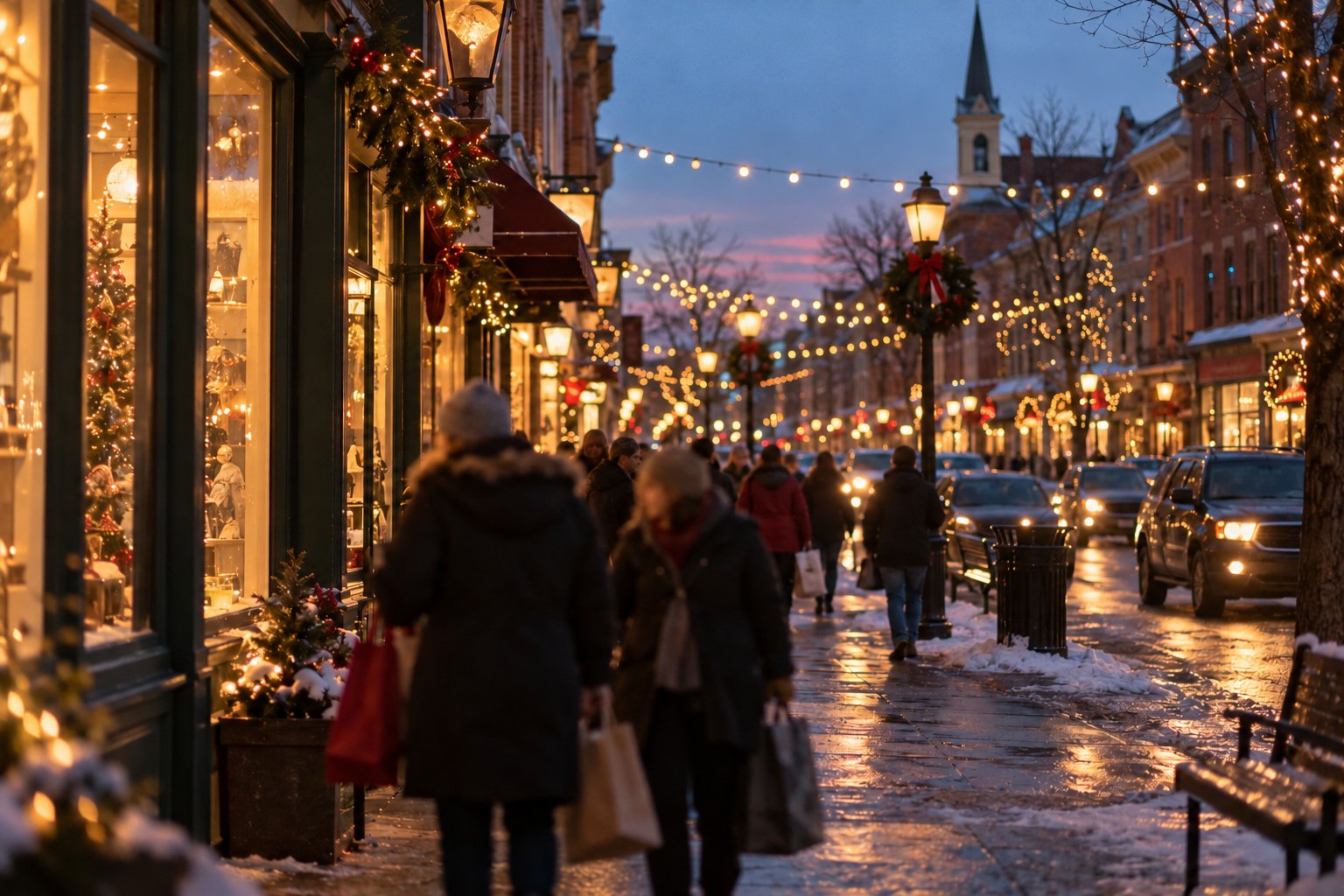
Holiday spending in 2026 should top $1 trillion, NRF forecasts. Yet Salesforce says 35% of holiday shoppers are trading down to cheaper alternatives.
Both can be true at once.
More money is coming. Every shopper is guarding theirs.
So here are three numbers worth taping above your desk, and what each one should change on your store before Black Friday.
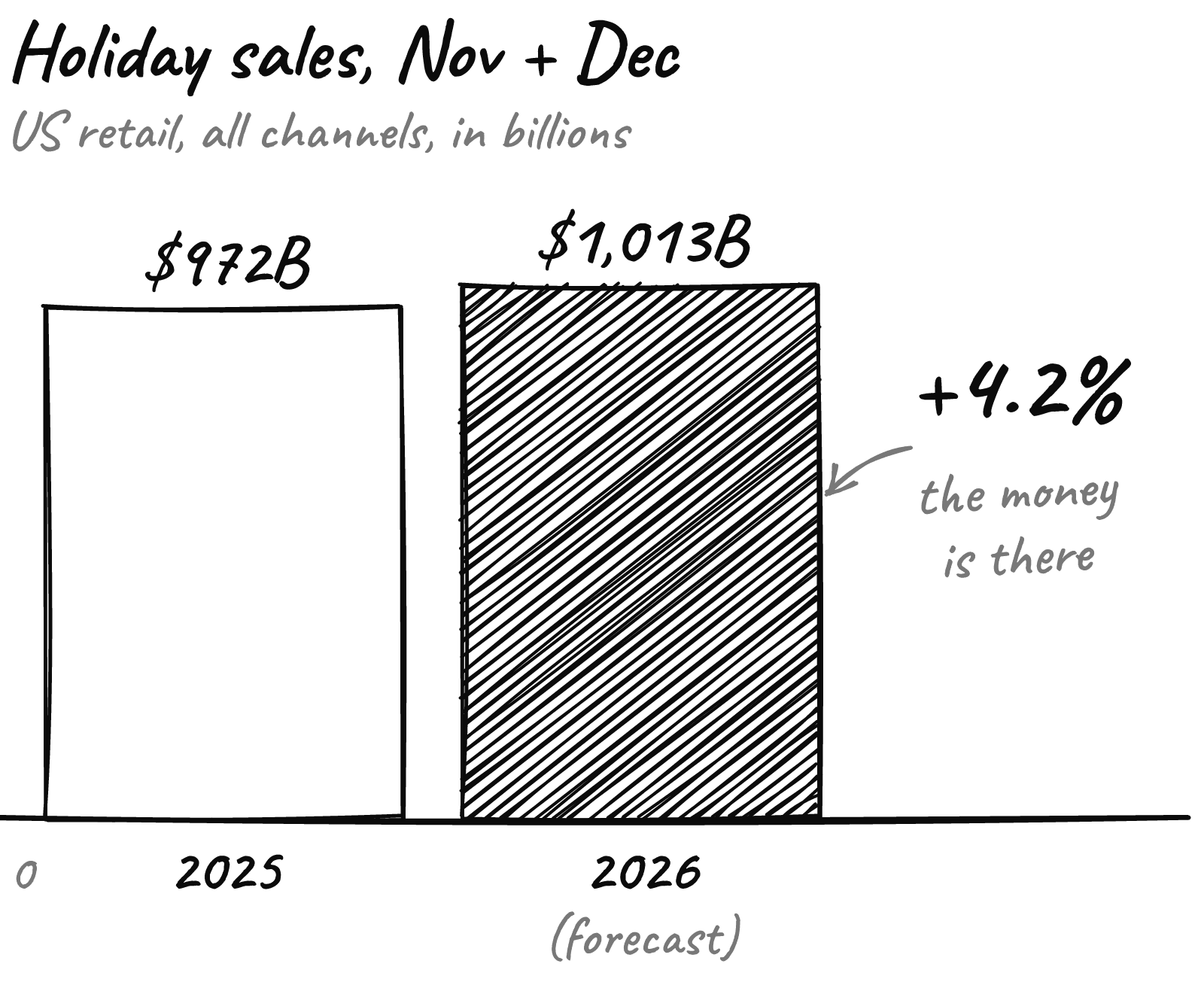
Number one: $1.013 trillion says the money is there
That’s the National Retail Federation’s forecast for US retail sales in November and December, up 4.2% on last year’s $972 billion.
It covers US retail as a whole, stores and online together. Read it as the weather, not your own forecast.
The weather looks fine. NRF expects people to put the holidays first while they “remain mindful of their budgets.”
What it changes: plan stock and ad spend for a normal season, not a bad one. People will buy. The real question is what they buy.
Number two: 35% says your best seller needs a cheaper sibling
Salesforce puts it at 35% of all holiday shoppers actively trading down to cheaper alternatives. That’s more than one in three.
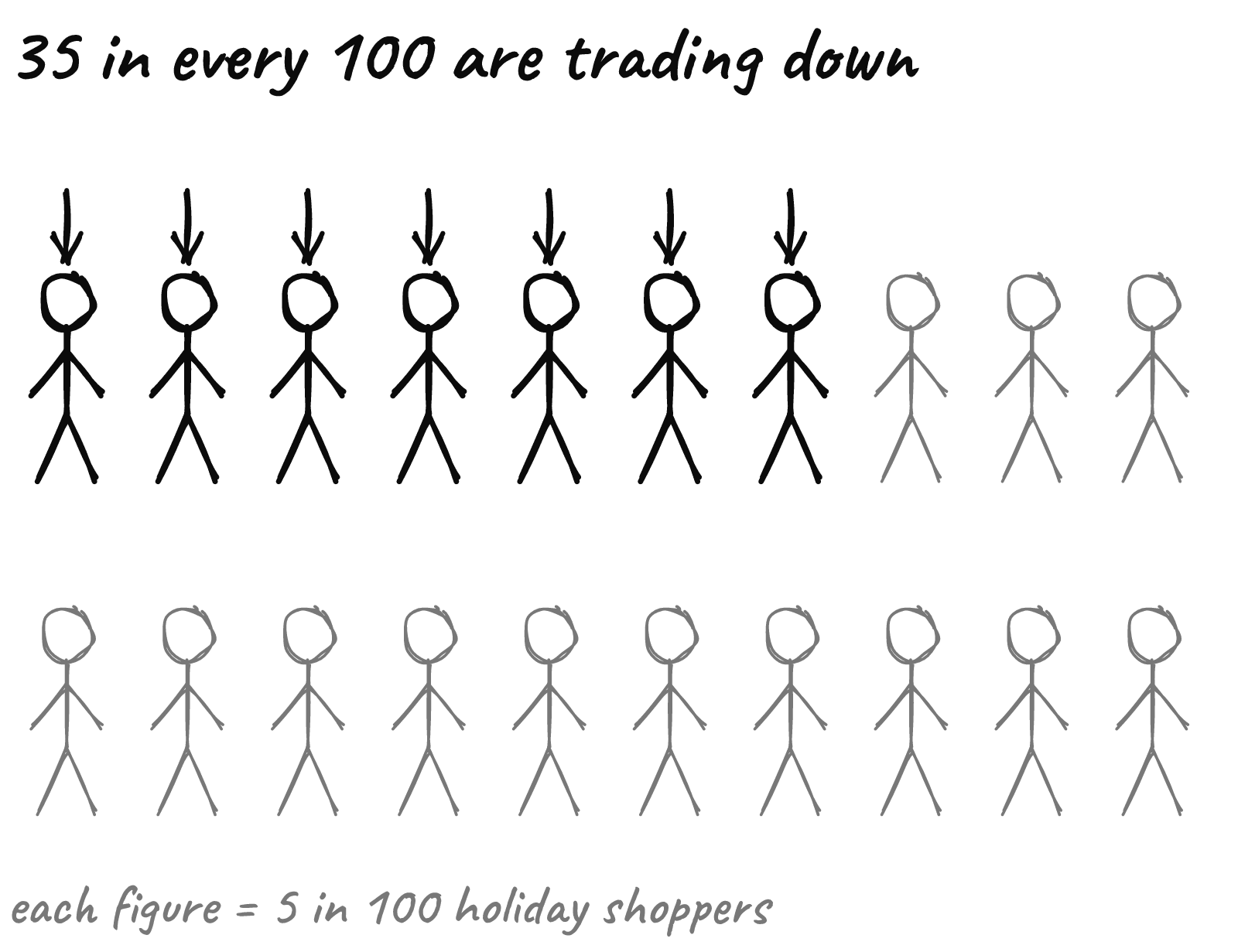
A shopper trading down hasn’t left your category. They still want the thing. They want it for less.
If your store has nothing cheaper, the next tab over does.

So give every best seller a smaller yes. Not a markdown on the hero. A different product, at a lower price, that still feels like a proper gift.
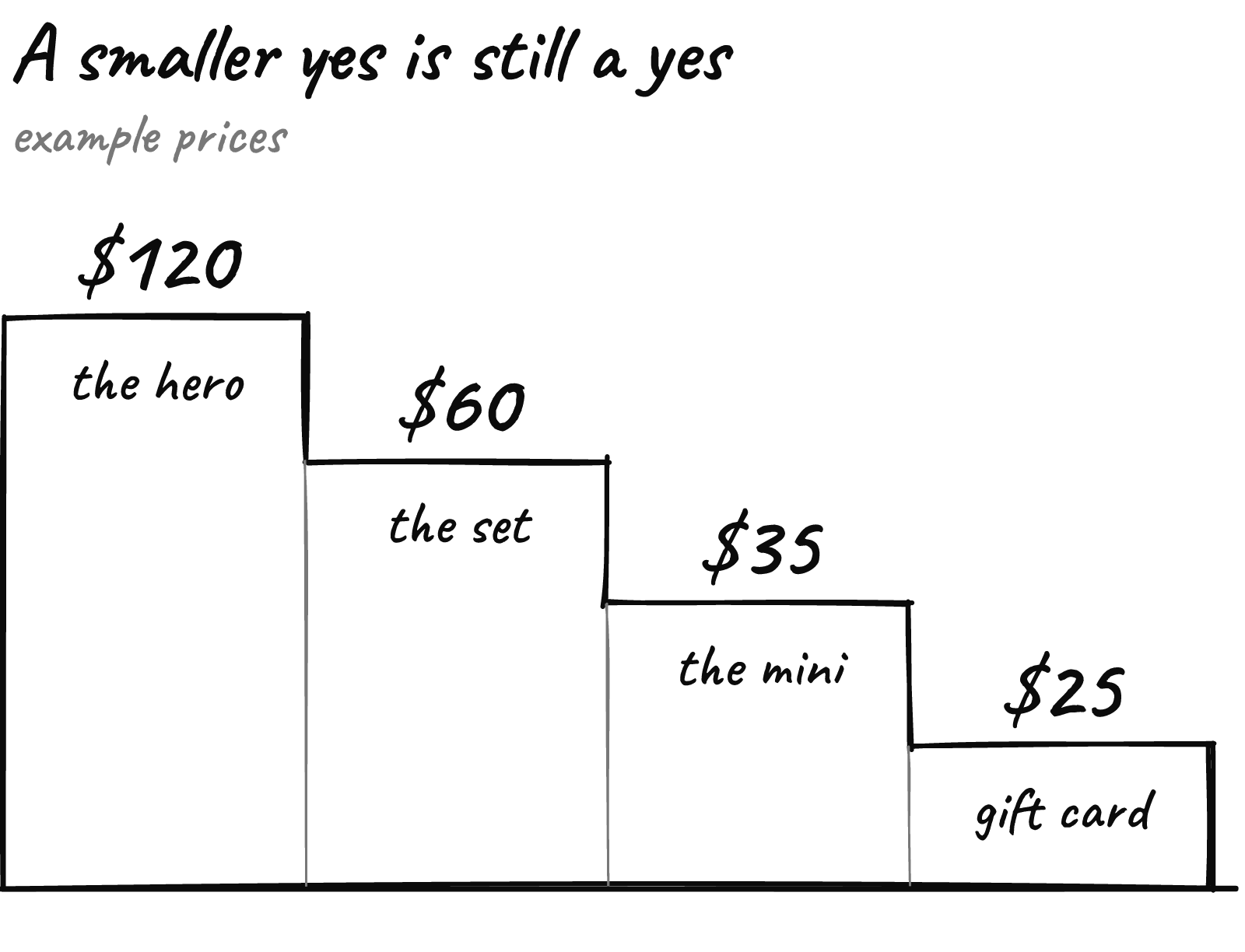
Most catalogs already hold the parts:
- A mini or travel size of the thing people already love.
- A starter set of two smaller items at a round gift price.
- A gift card for the shopper who can’t decide.
Then put the smaller yes where the trade-down happens: on the hero’s product page, right under the price.
Open your five best sellers. Can a shopper get any of them, or something close, for half the price? If not, that’s this week’s job.
Number three: $21.3 billion says shoppers are splitting the bill
Adobe forecasts that buy now, pay later will drive $21.3 billion of US online spend in November and December, up 6.6%. It expects $1.09 billion of that on Cyber Monday alone, and 82% of it on mobile devices.
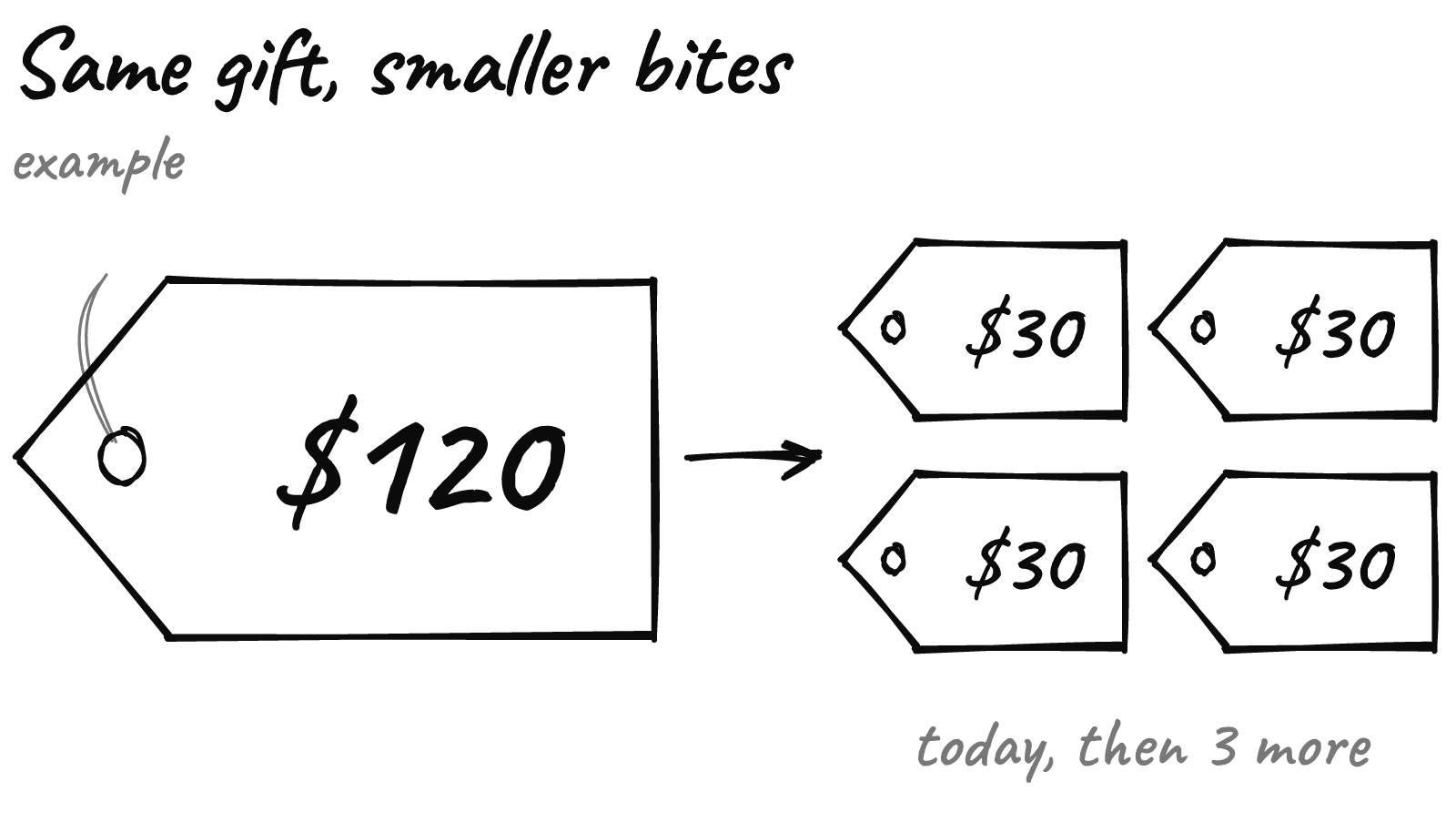
Trading down and paying later come from the same place: a shopper trying to make this purchase fit this month.
If you already offer installments, the easy mistake is hiding them until checkout. On Shopify, your theme can show the Shop Pay Installments banner on the product page and in the cart. Check that yours does, on a phone.
If the product page needs work before the rush, that’s what we do.

What to do this week
- List your five best sellers and the cheapest way to get each one.
- Make one smaller yes for any that has none: a mini, a set or a gift card.
- Build a gifts-under-$50 collection and link it from your homepage.
- Open a product page on your phone and look for the installment price near the main price.
- Check your free shipping line against the new cheaper items. Salesforce says shoppers at every income level ranked free shipping first.
A bigger season doesn’t mean bigger baskets. Make it easy to say a smaller yes.
Want a second pair of eyes on your holiday offer? Send us your store URL and within 24 hours we’ll send back a free report on your speed, checkout and conversion.