Interchange fees are the hidden toll on every card sale
Interchange fees in plain English, before a judge weighs the Visa and Mastercard settlement on Nov 16, and what it means for your store.


Interchange fees are what your customer’s bank charges every time their card pays you. You almost never see them, because they sit inside the one fee your payment processor shows you.
That is about to matter. On Nov 16, a federal judge in Brooklyn is set to hold the final approval hearing on a Visa and Mastercard settlement that would change interchange fees for years.
Merchants paid an average of 2.35% on Visa and Mastercard sales in 2024, by the Nilson Report’s count, as Payments Dive reported.
So here is the jargon in plain English, and what it means for a store like yours.
A card sale is a toll road with three booths
Picture your customer’s money driving from their bank to yours. The road belongs to Visa or Mastercard.
On the way it passes three booths. The first belongs to the bank that issued the card. That toll is interchange, and it is the biggest. The second is the network’s own fee. The third is your processor, which takes a cut for running the gate.
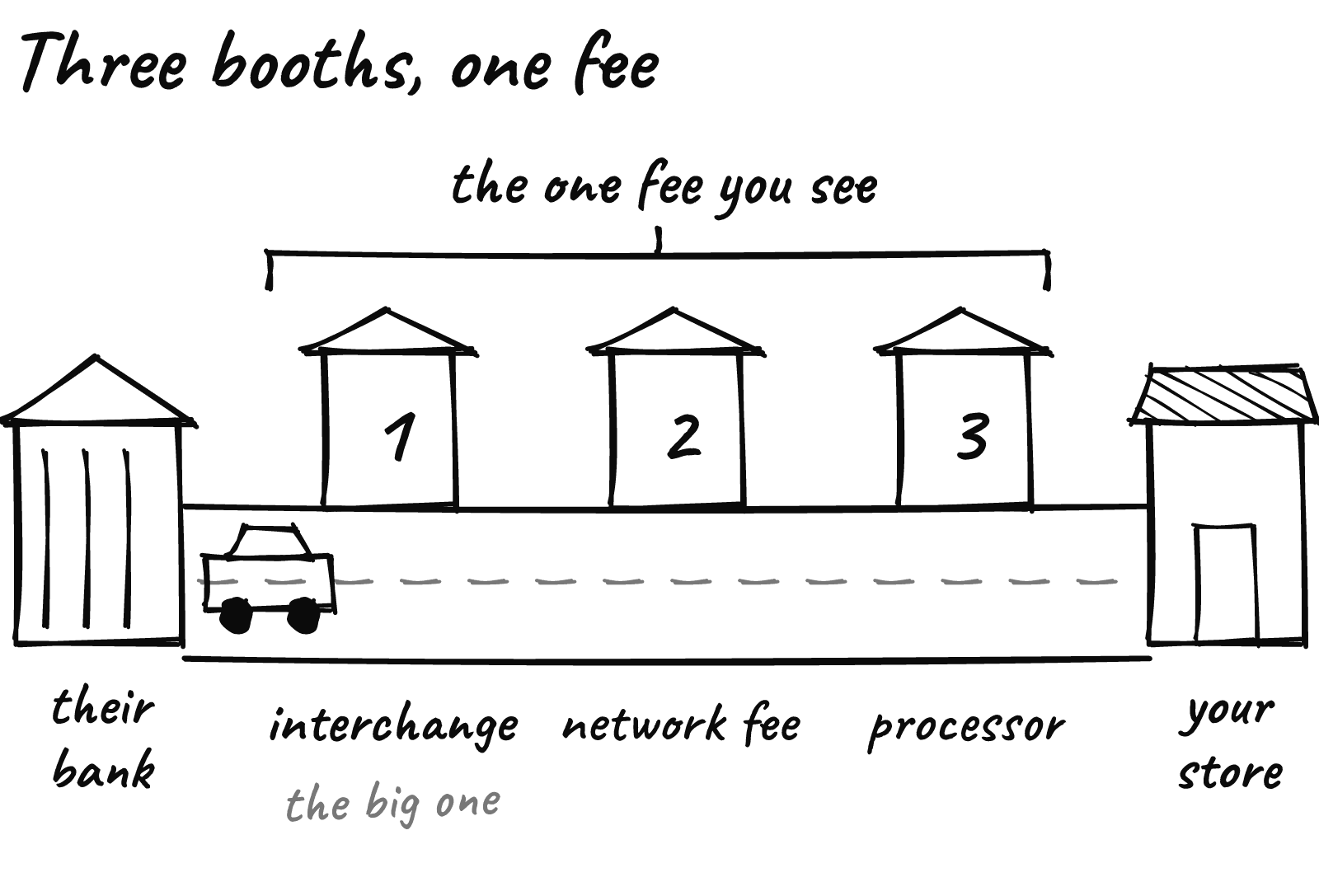
Most stores pay all three as one price per order. Visa’s own fee schedule says “merchants do not pay interchange reimbursement fees.” Technically true: your processor pays it, then folds it into the rate it charges you.
Think of that rate as a toll pass. You pay the pass company, and it settles with every booth on the road.
The toll depends on the card in your customer’s wallet
Not every car pays the same toll. Visa publishes its rates, and the newest table, effective Oct 24, shows how far apart they sit for the same online sale.
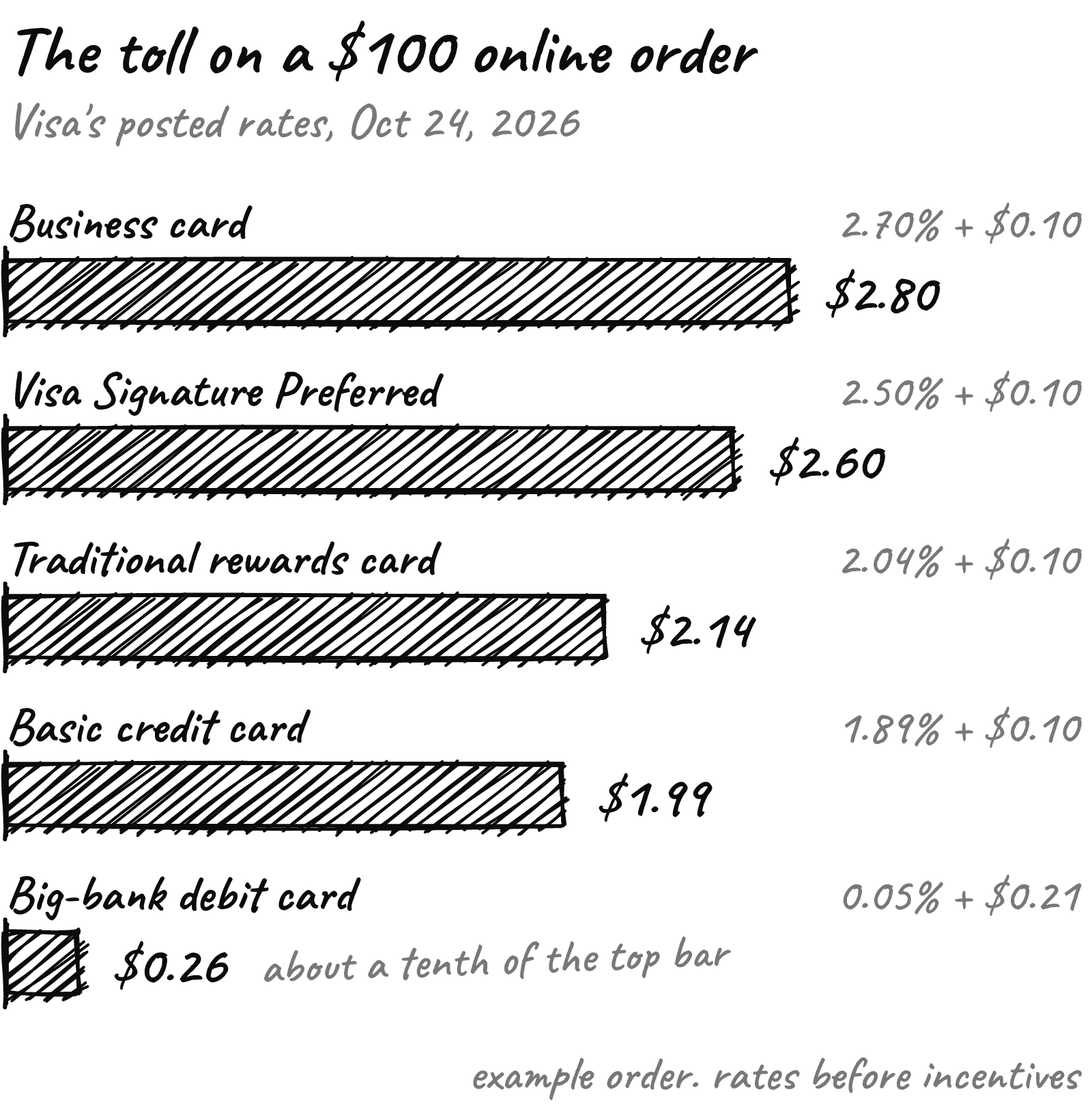
On the same order, a business card carries about ten times the toll of a big bank’s debit card. You don’t pick which card shows up.
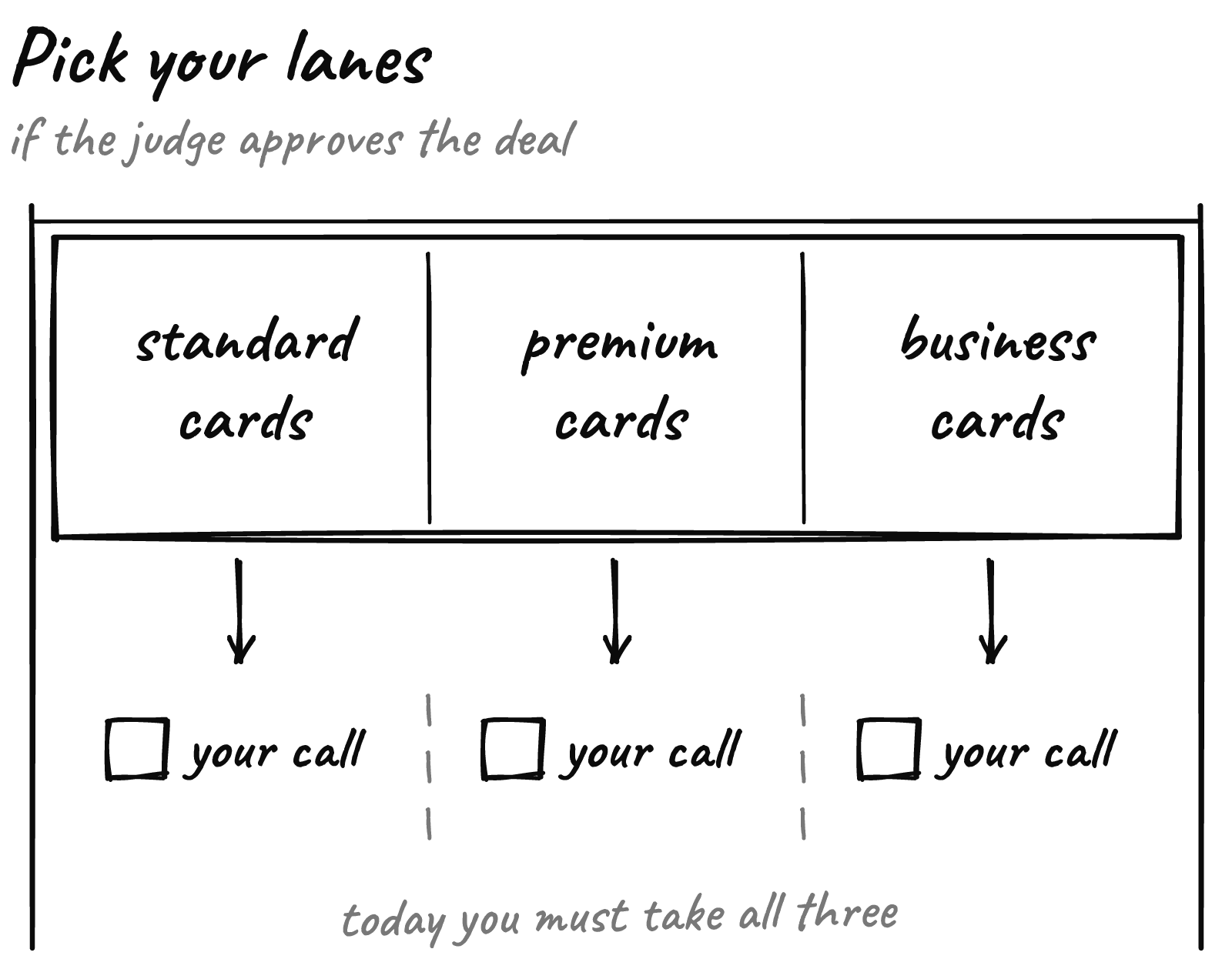
Today you take them all. That is the networks’ “honor all cards” rule, and the settlement would loosen it.
The settlement would lower some tolls and let you close some lanes
If the judge approves it, here is what changes, from Visa’s filing and Digital Transactions:
- Average credit interchange drops by 0.10 percentage points for five years.
- Posted credit rates are capped for five years.
- Standard consumer cards are capped at 1.25% for at least eight years.
- You choose whether to take each kind of card: commercial, premium consumer, standard consumer.
- You may add a surcharge of up to 3% on Visa and Mastercard credit cards.
Not everyone likes it. Walmart, the National Retail Federation and the Retail Industry Leaders Association have objected. Visa and Mastercard call the objectors “no more than a vocal minority.”
The judge gave it preliminary approval in June, but the same court rejected an earlier version in 2024. Final approval is not certain.
On a flat rate, the cut reaches you only if your processor passes it on
Back to the toll pass. If the first booth gets cheaper, your pass costs less only if the pass company lowers its price.
Processors bill in one of two ways. A flat rate is a set price per order, fixed by your plan. Interchange-plus passes the actual toll through and adds a fixed markup on top.
On interchange-plus, the cut shows up by itself. On a flat rate, it shows up only if your processor reprices. Nothing in Visa’s summary of the deal says what processors must do with the savings.
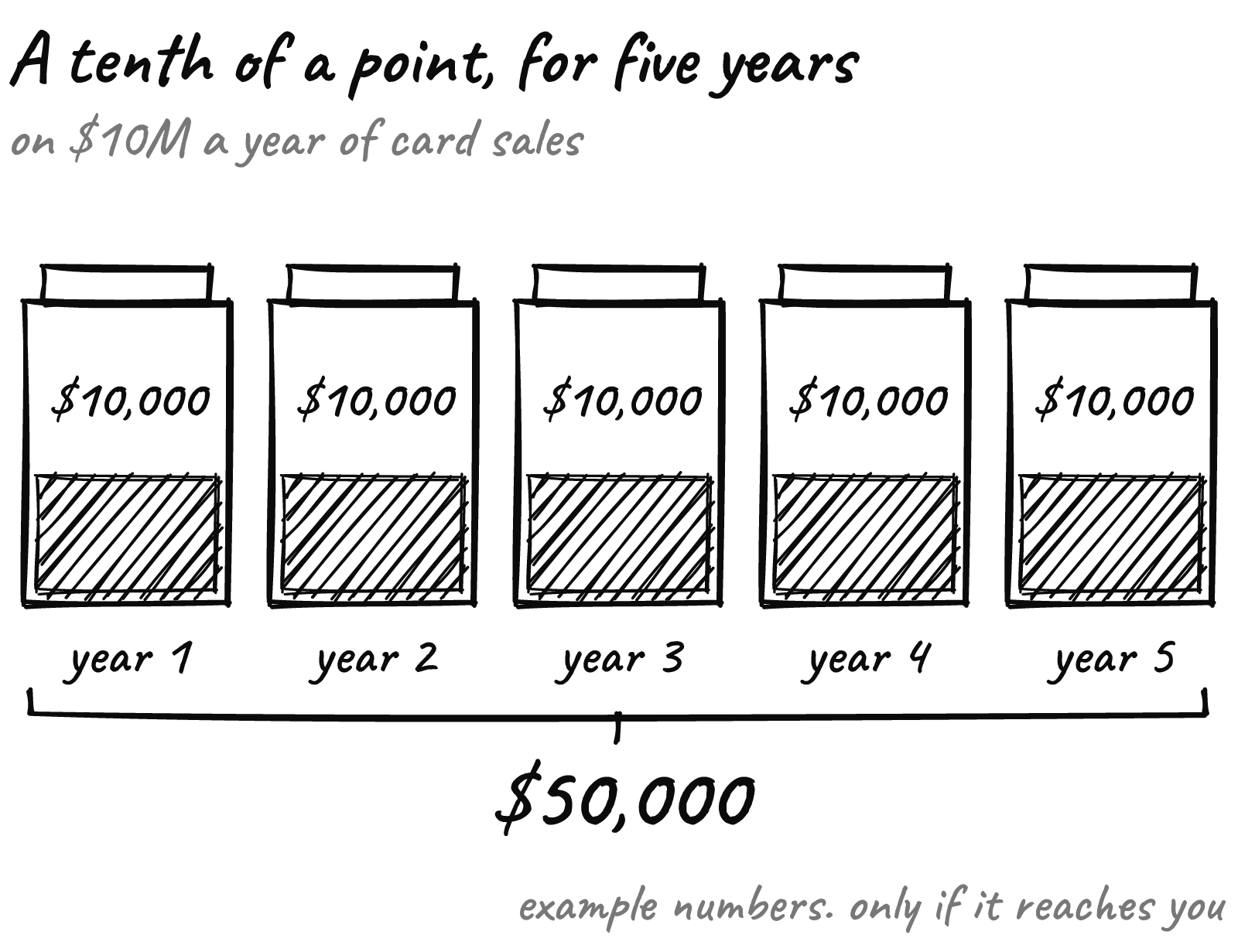
A tenth of a point sounds like nothing. On $10 million a year of card sales it is $10,000 a year, or $50,000 over the five years. Those are example numbers, and the money is yours only if it gets past your processor.
Ask your processor today: if the cut comes, does our rate move?
Declining cards or adding a fee could cost more than it saves
The new rights look like the bigger prize. Turn away business cards, or add 3% to every credit card order, and your tolls drop.
But your checkout isn’t a gas station. In Baymard’s survey, 40% of US shoppers who abandoned a checkout said extra costs like shipping, tax or fees were too high. A surprise 3% at the last step is one of those costs.
A declined card is worse. The shopper has to find another one, or leave.

If the deal is approved and you still want to try it, test it on a slice of traffic first. That is the kind of question conversion testing is for.
What to do this week
- Find your pricing model. Open last month’s processing fees and see whether you pay one rate per order or interchange plus a markup.
- Check your card mix, if your processor reports card types. Premium and business cards carry the biggest tolls.
- Ask your processor, in writing, whether an approved cut would reach your rate, and when.
- Price out interchange-plus on last month’s orders, if your processor offers it, and compare it with what you paid.
- Set a reminder for Nov 17 to check how the hearing went.
A tenth of a point won’t change your year. Knowing what you pay at each booth can change the next five.
Want a second look at your checkout before you touch fees? Send us your store URL and within 24 hours we’ll send back a free report on your speed, checkout and conversion.