The 2027 shipping rate increase isn’t really 5.9%
UPS and FedEx both put their 2027 shipping rate increase at 5.9%. Five beliefs about that number, checked against the carriers' notices.

UPS and FedEx have set their 2027 shipping rate increase at the same number: 5.9% on average. FedEx has now used that figure four years running.
Your bill probably won’t move by 5.9%.
UPS says as much in its own footnote: the impact “will vary according to your shipping characteristics” and the terms of your agreement.
So here are five easy beliefs about that number, and what the carriers’ notices actually say.
“It’s 5.9%.” That’s an average, and light parcels rise more
5.9% is a blend of every service, weight and zone on the list. Analysts at Loop went through FedEx’s 2027 tables cell by cell.
On FedEx Ground, the lightest boxes rise most: 6.49% for 1 to 5 pounds. Four of the five weight bands land above the headline.
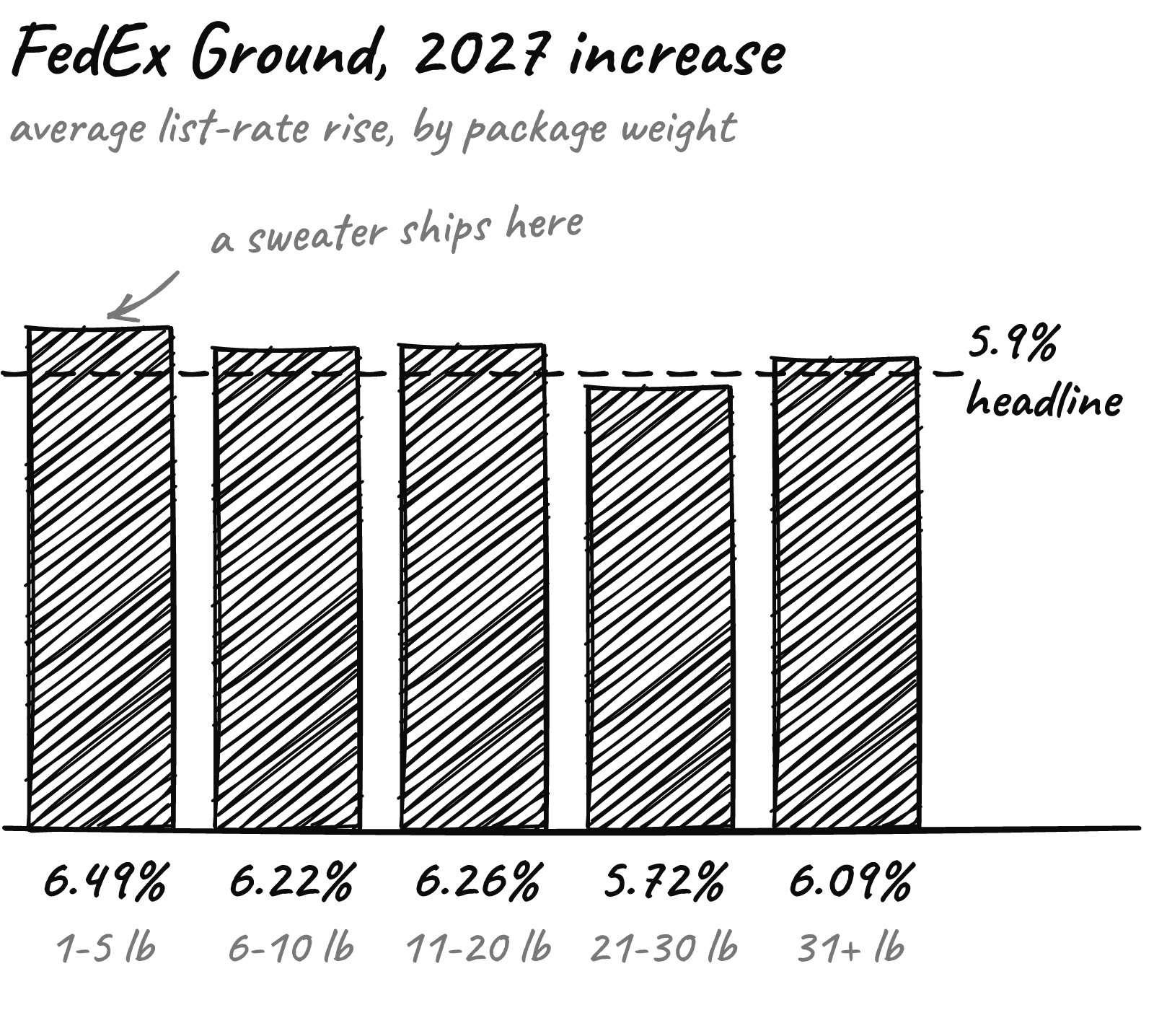
What pulls the average down is Express Saver, at 3.09%. If you ship mostly Ground, plan on a little more than the headline, not less.
“It starts in January.” UPS starts on Dec 21
UPS’s new rates take effect Dec 21, 2026. That’s a week earlier than in recent years, and it lands in the last shipping week before Christmas.
FedEx follows on Jan 4. The fuel surcharge tables move even sooner: UPS changed its domestic tables on Nov 2, and FedEx changes its tables on Nov 9.
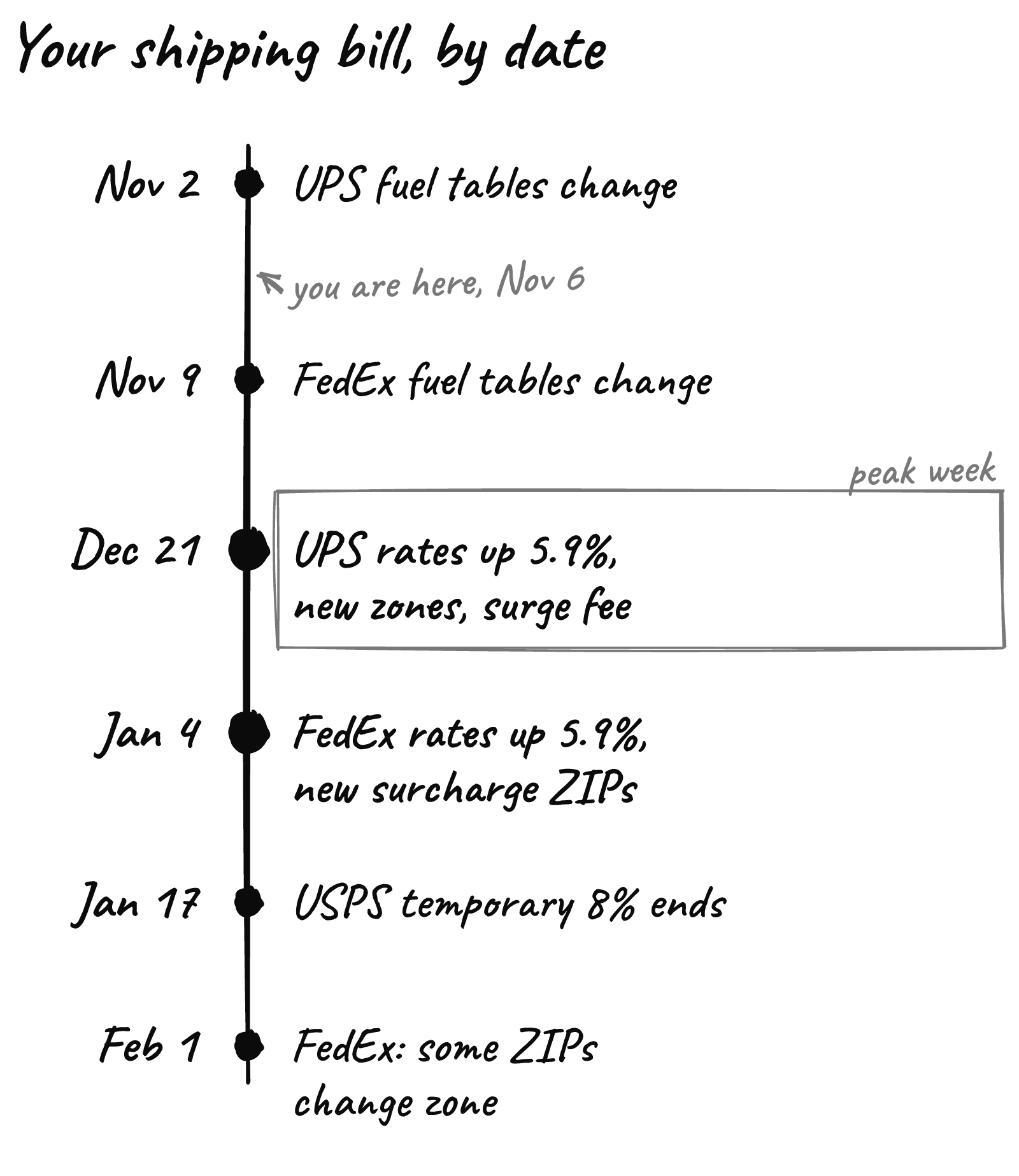
UPS also plans a per-package surge fee from Dec 21 on Ground and Ground Saver parcels sent from certain origin ZIP codes, for some customers. It said the ZIP list would come in early November.
USPS isn’t standing still either. Its temporary 8% increase on Priority Mail, Priority Mail Express, Ground Advantage and Parcel Select ends Jan 17, 2027. The notice doesn’t say what comes after.
“Same box, same address.” The carriers are redrawing the map
Your price depends on a zone: roughly, how far the customer’s ZIP is from the ZIP you ship from. Both carriers are changing which ZIPs sit where.
UPS changes its zone alignments and its area surcharge ZIP list on Dec 21. FedEx changes its delivery area surcharge ZIP lists on Jan 4 and the zone for select ZIP code pairs on Feb 1.
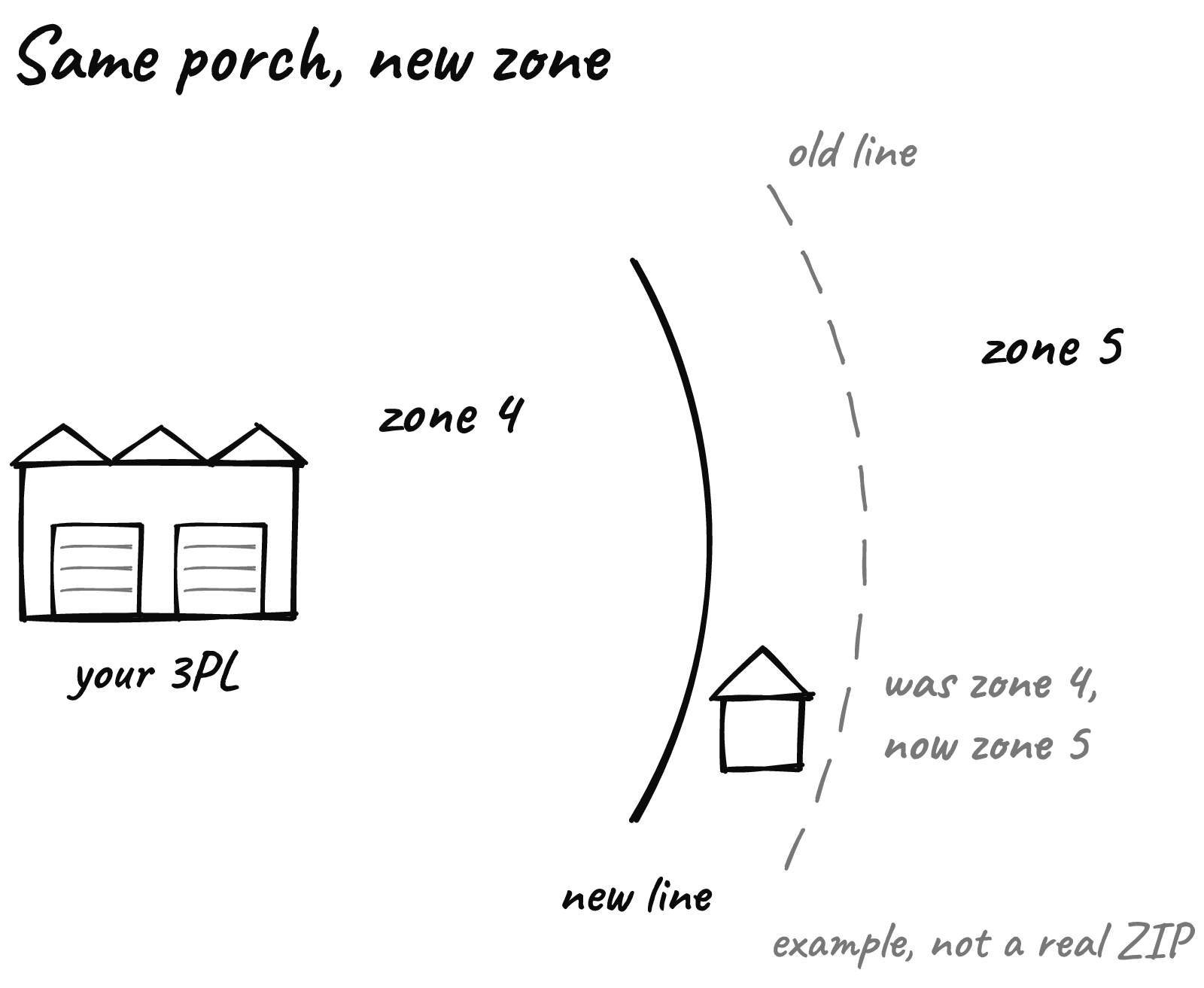
So the same box to the same porch can cost more next year for reasons that have nothing to do with 5.9%. It moved up a zone, or its ZIP joined a surcharge list.
Loop’s Paul Yaussy told Logistics Management the number of affected shipments will likely rise, even if the ZIP list doesn’t grow. FedEx’s residential delivery area surcharge goes from $6.60 to $7.00.

“Surcharges are rounding.” One rule adds 10 billable pounds
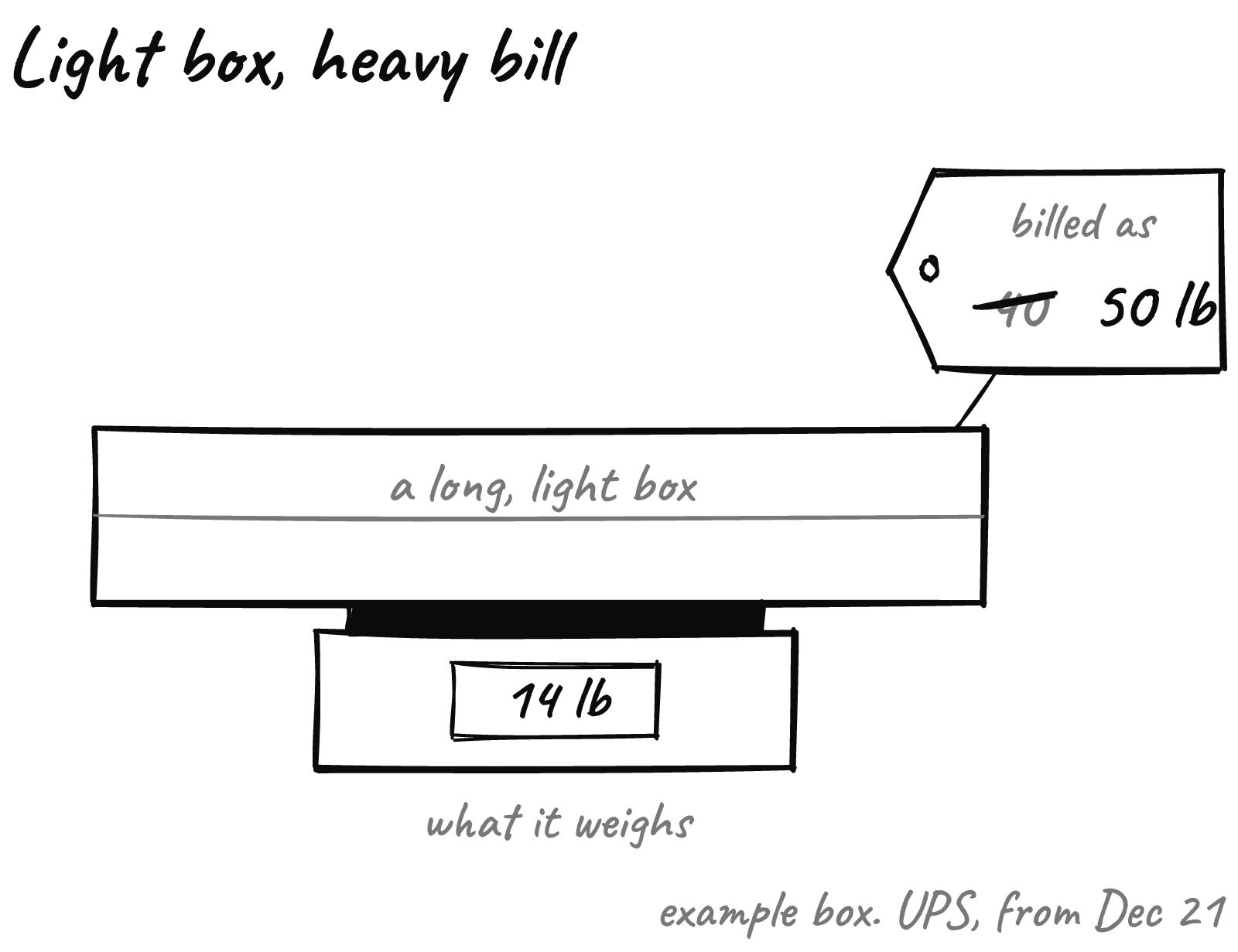
A box can trip a charge called Additional Handling by being big, heavy or oddly packed. When it does, UPS bills it at a minimum weight, and that minimum goes from 40 to 50 pounds on Dec 21.
Yaussy’s estimate: those extra 10 pounds could mean 9% to 22% more, depending on the zone.
FedEx’s Additional Handling charges rise 7.1% to 7.6% across zones, by Loop’s count. Its residential delivery charge goes from $6.95 to $7.35.
If you sell anything long or bulky, like rugs, lamps or bike parts, this rule may matter more to you than the headline.
Measure your biggest box tonight. If it trips Additional Handling, a smaller box may pay for itself.
“Our discount covers it.” A discount is a share of a bigger number
A negotiated rate is usually a percentage off list. When the list rises, the same percentage off still costs you more.
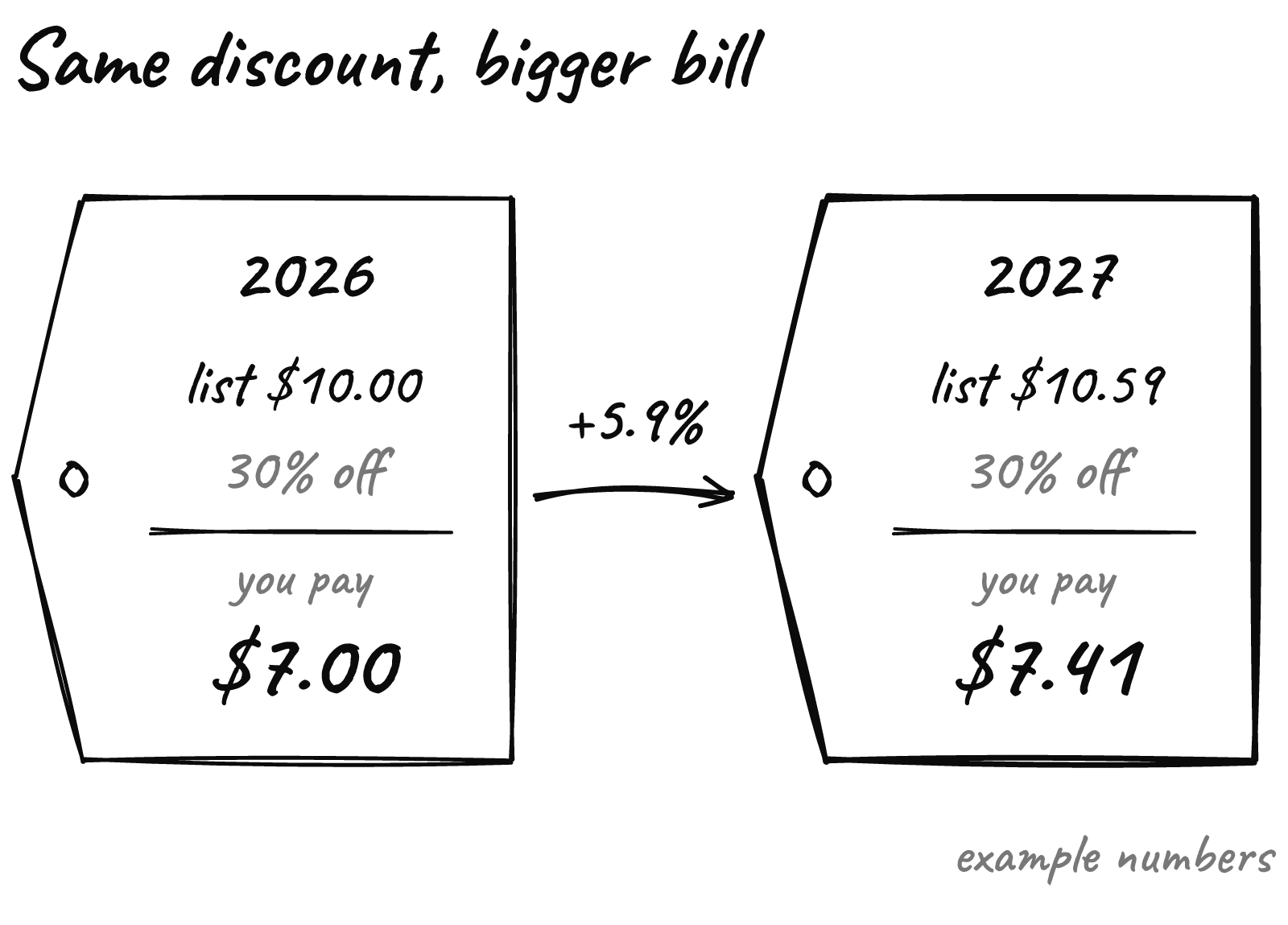
The floor moves too. FedEx’s minimum list charge for a Ground package goes from $11.99 to $12.70, and Loop found minimums rising faster than base rates on four of five services.
And if you charge customers flat shipping rates you typed into Shopify, those won’t move on Dec 21. Your cost will. The gap comes out of your margin.
ShipScience’s Dave Sullivan made the same point to Logistics Management: the averages describe the carrier’s price list, not what your account will pay. The number that matters is yours: last year’s shipments, priced on next year’s tables.
What to do this week

- Pull 90 days of carrier invoices. Split base rates from surcharges, so you know which half to work on.
- Reprice your top 20 destination ZIPs on the UPS preview tables and FedEx’s 2027 list rates, both posted now.
- Measure your three biggest boxes against the Additional Handling rules.
- Ask your 3PL two questions: is our origin ZIP on the UPS surge list, and when do the new rates reach our invoice?
- Budget 2027 shipping as a range, not a 5.9% line. Then check your free-shipping threshold still clears it.
Four rounds of FedEx’s average add up: a $10.00 list rate from 2023, raised by exactly 5.9% each time, would be about $12.58 in 2027. Plan for the years, not the press release.
Want a second look at your store before the new rates land? Send us your store URL and within 24 hours we’ll send back a free report on your speed, checkout and conversion.