Your Black Friday budget can’t feed that many Meta ad sets
How many Meta ad sets your budget can carry, worked on a napkin with Meta's own formula, and the day your last big edit should land.


Your Meta ad sets each need about 50 purchases a week to learn who to show your ads to. Split one budget across too many of them and none of them gets there.
Meta just put a price on that. In its peak season post on Oct 21, it said ad sets under that line “ran about 28% more expensive per purchase.”
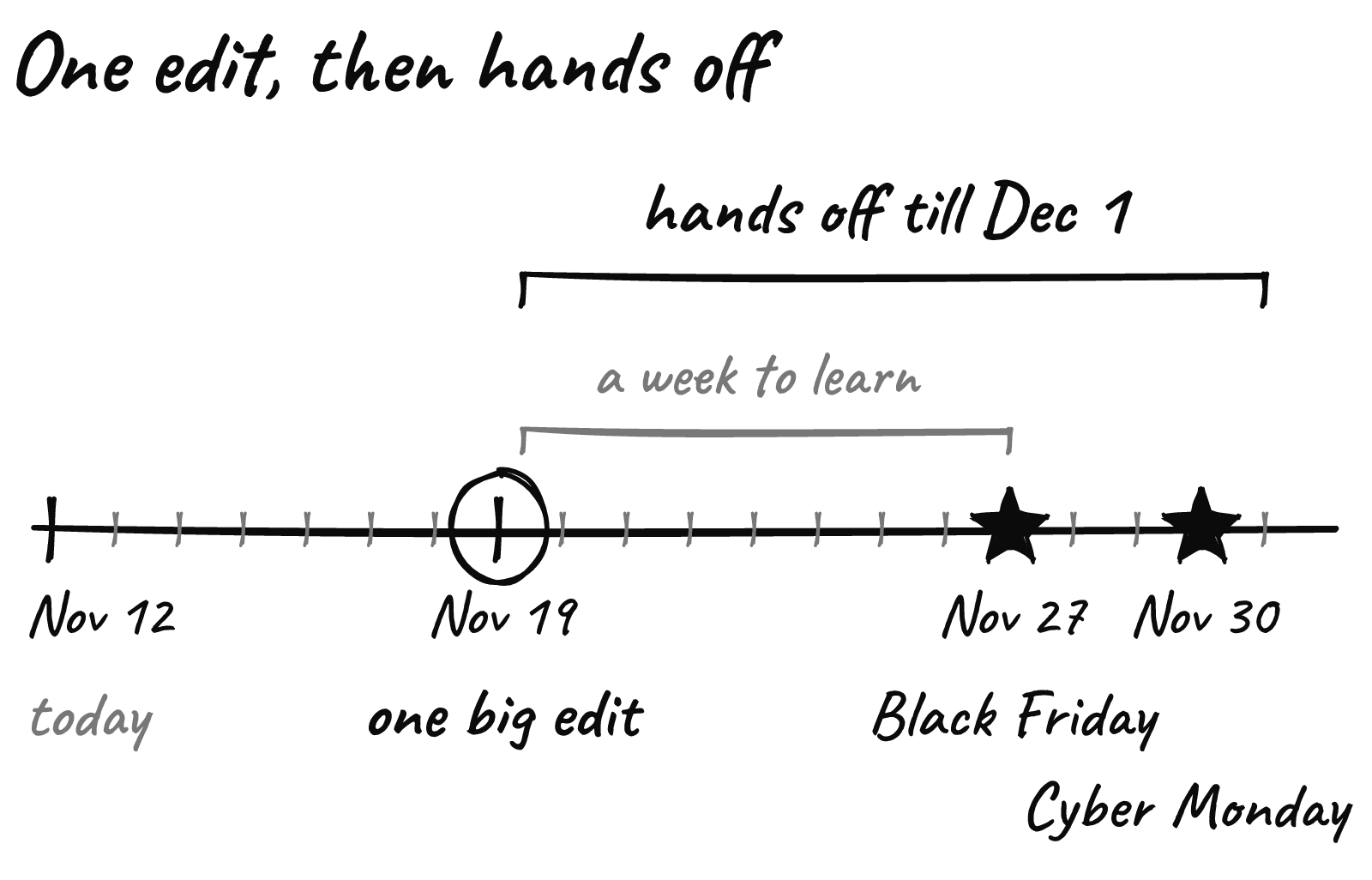
Black Friday is Nov 27. That leaves about a week to fix it before touching anything gets risky.
So grab a napkin. This takes two lines of math.
Meta wrote the formula down, and it fits on a napkin
Here it is, from the same post.
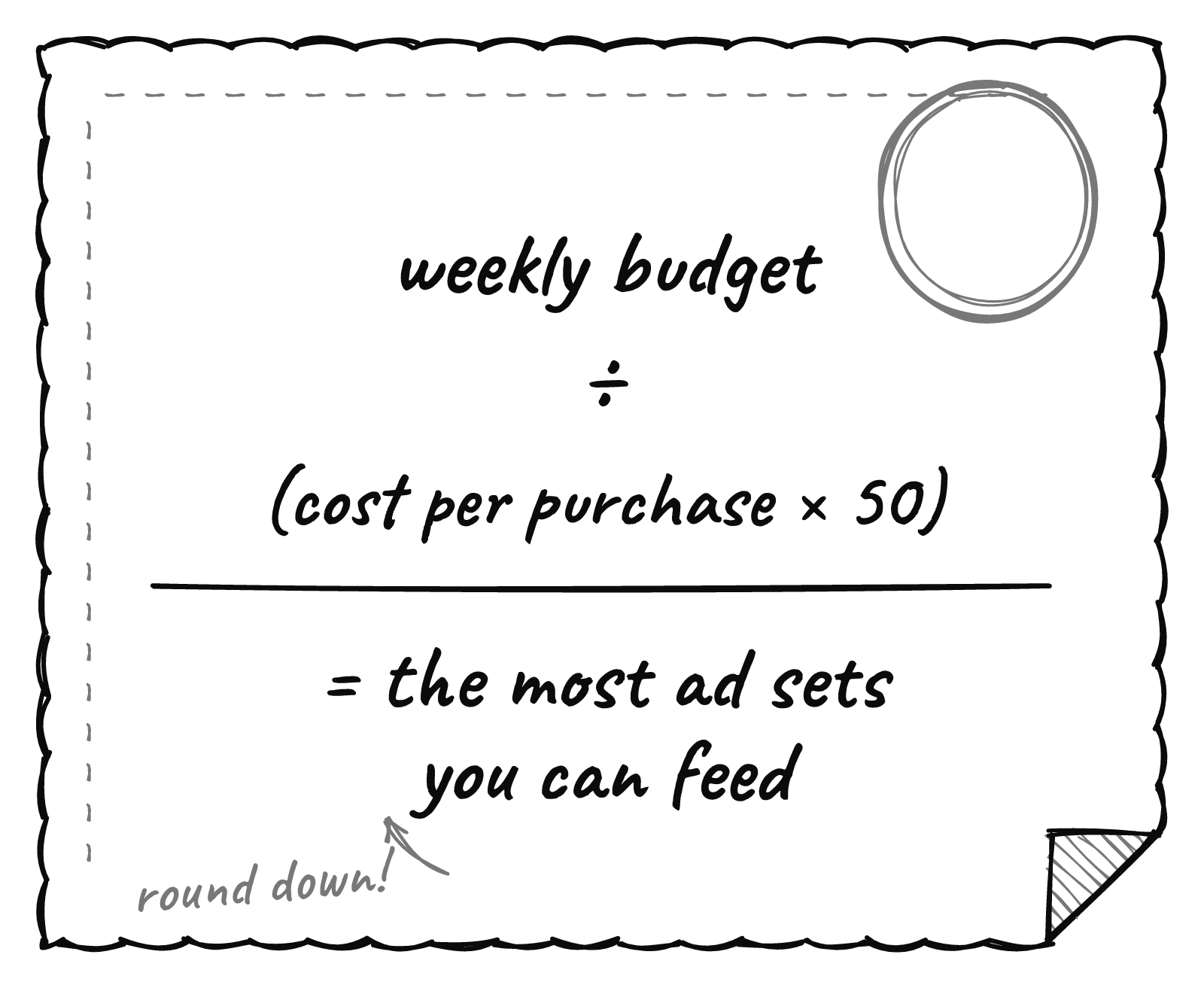
The 50 isn’t new. Meta’s help page on the learning phase says an ad set usually settles after about 50 results in the week after its last significant edit. Until then, results are less stable and usually cost more.
The 28% is new, and it’s Meta’s own number. The post doesn’t say how it was measured, so treat it as a direction, not a promise.
Meta also says most accounts run more ad sets than their budget can carry. Here’s how to check yours.
Work it with your numbers, not someone else’s
Take an example store. Every number in this section is made up to show the math.
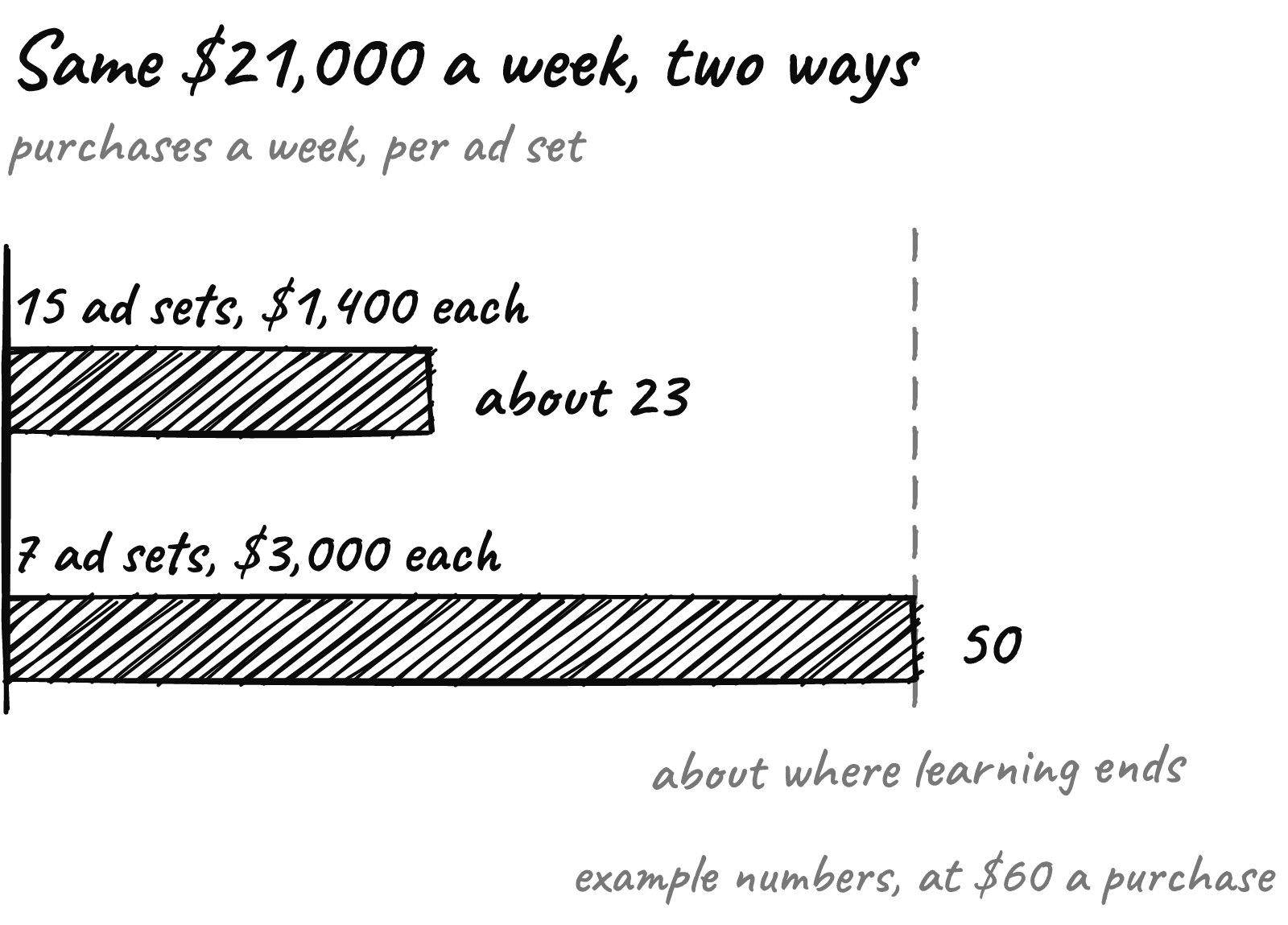
It spends $21,000 a week on Meta, and each purchase costs it $60.
- Line one: $60 × 50 = $3,000. That’s what one ad set needs each week to reach 50 purchases.
- Line two: $21,000 ÷ $3,000 = 7. That’s the most ad sets this budget can feed.
Now say the account runs 15 ad sets: a few prospecting sets, retargeting, and old tests nobody switched off. Split evenly, each gets $1,400 a week. At $60 a purchase, that’s about 23 purchases. Not even halfway.
Now the part that stings. If that $60 climbs to $75 in Black Friday week, line one becomes $3,750 and line two becomes 5.6.
Round down to 5. Six tenths of an ad set is an ad set that never finishes learning.
The other way to raise line two is a lower cost per purchase. A product page that converts better is the one lever in that sum Meta doesn’t control.

Fold the small ad sets into the ones that already sell
Sort your ad sets by purchases last week. Keep the ones closest to 50. Fold the rest into them, or switch them off.
Meta’s learning phase page makes the same case: combine similar ad sets and you combine what they’ve learned.
Merging is a big edit, so do it once. Not one ad set a day.
Tonight: add the “Last significant edit” column in Ads Manager. Now you can see every reset.
Your Black Friday ads count as a big edit
This is the trap. Meta’s list of significant edits includes adding a new ad to an ad set and any change to its creative. Either one sends the ad set back to learning.
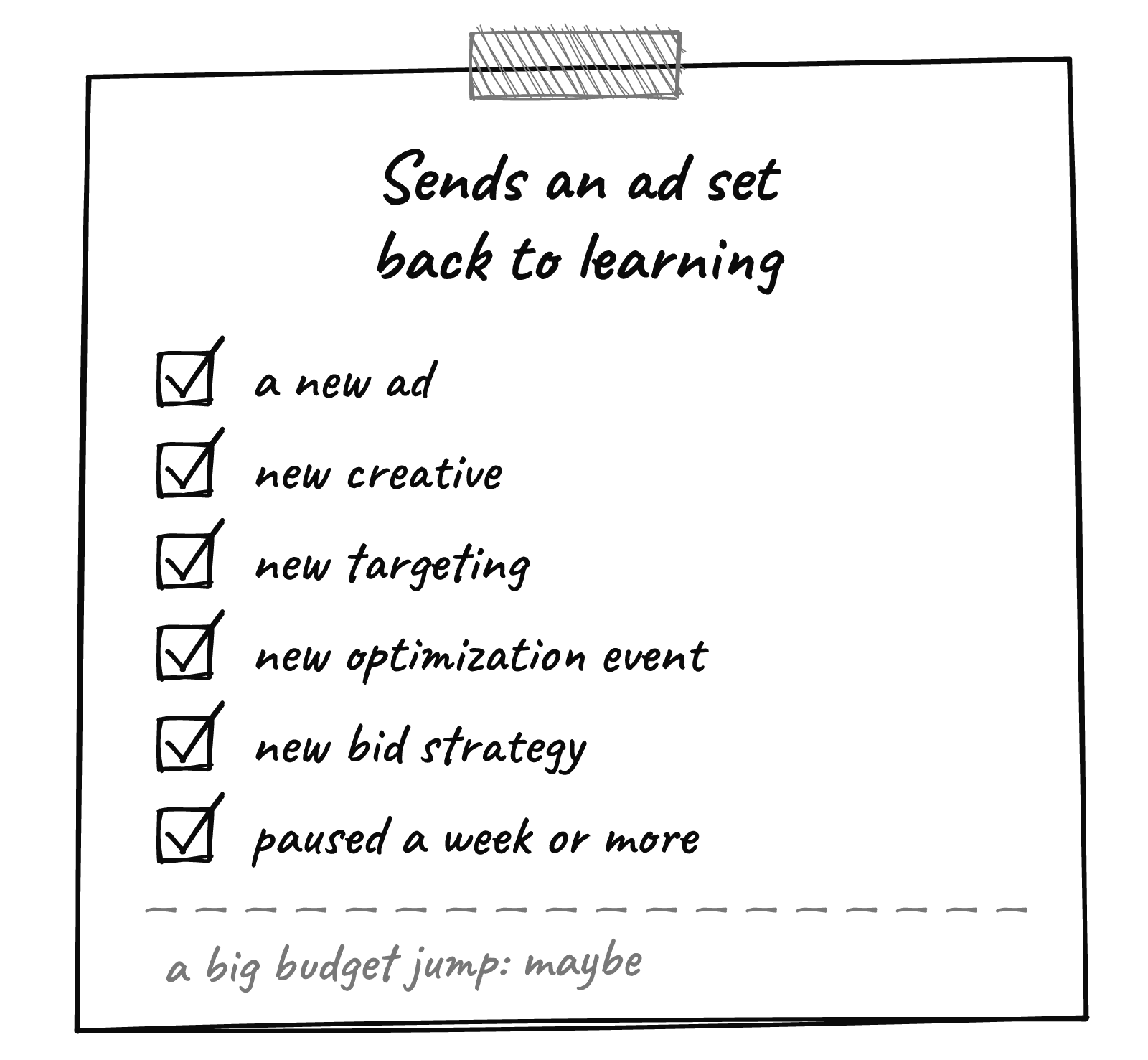
Budgets are a maybe. Meta’s own example: going from $100 to $101 likely won’t reset anything, but $100 to $1,000 may. With Advantage+ campaign budget, one campaign-level change might reset several ad sets at once.
So if the sale ads go in on Thanksgiving night, those ad sets start the biggest weekend of the year back in learning. You can still do it. Just do it on purpose, knowing what it costs.
Meta’s post says every change costs you twice: once for the restarted learning, and once for the days the old setup kept spending. Its fix is to group your changes, so you sit through one learning phase instead of five.
What to do this week
- Get your two numbers. Your Meta spend for the last 14 days divided by two, and your cost per purchase over the same days.
- Work the napkin. Weekly budget ÷ (cost per purchase × 50). Round down.
- Count your live ad sets. Anything over the answer gets folded in or switched off.
- Write the brief in three lines, as Meta’s post suggests: what you optimize for, how hard it chases, how results are counted.
- Make every big change in one go by Thursday, Nov 19, then leave it alone until Cyber Monday is over.
Fewer ad sets feels like doing less. On the napkin, it’s the only way each one gets enough to learn.
Want to know what happens after the click? Send us your store URL and within 24 hours we’ll send back a free report on your speed, checkout and conversion.